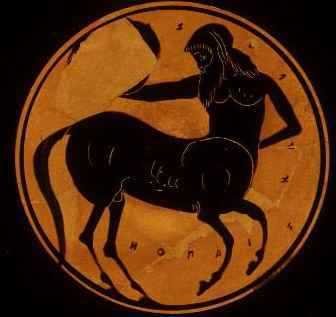
Years ago when I first started playing chess...Two of us would always play on the same night at the same place every week. After a while many people started showing up until their were about 15 or so total. It took many weeks before one by one (some of them new eachother outside this) most came out about being recovering alchoholics and or growing up in abusive situations. Im not sure if this goes beyond correlation or the general psychology of this type of person and chess But it is certainly curious.
As Hume says "reason alone is never a motive to action." Sentiment leads our decision making from the start. So we play chess. Who would reason logically to do such a thing? Its an expression and an art form. A way for folks without control over their lives to exert control. A small short lived psychologically structured world in a physical world of chaos. Socially rejected? Lost control of your addictions? Chess. Im sure thats not the whole picture but perhaps its a few unnoticed brush strokes.
Friday, September 29, 2006

Monday, September 25, 2006
Guarini's Problem

The earliest chessboard puzzle dates from 1512, almost 500 years ago. Guarini's Problem involves four knights, two white and two black, at the four corners of a small 3X3 chessboard. The white knights and the black knights need to exchange places. A knight can move on a chessboard by going two squares in any horizontal or vertical direction, and then turning either left or right one more square. It is a relatively simple puzzle to solve, even by trial and error.
The knights must march around a cycle, all in the same direction, either clockwise or counterclockwise, until their positions are exactly reversed.
Sunday, September 24, 2006
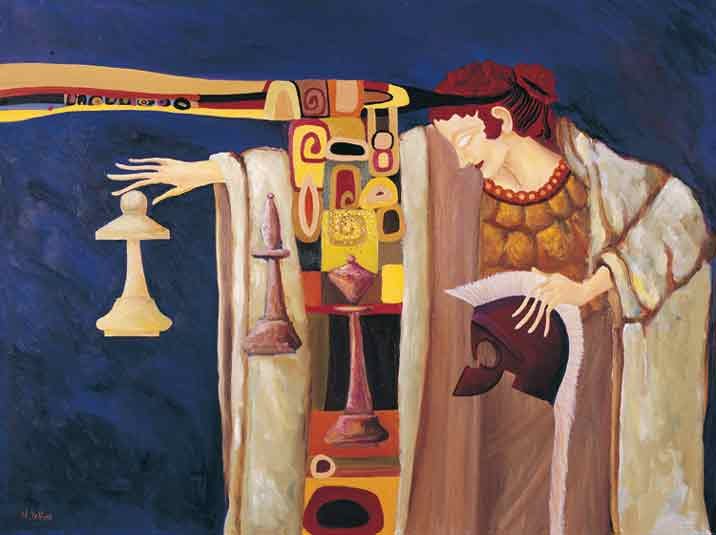
We are no other than a moving row
Of Magic Shadow-shapes tht come and go
Round with the Sun-illumined Llantern held
In Midnight by the Master of the Show;
But helpless Pieces of the Game He plays
Upon this Chequer-board of Nights and Days;
Hither and thither moves, and check, and slays,
And one by one back in the Closet lays.
Omar Khayyam, The Rubaiyat
Thursday, September 14, 2006
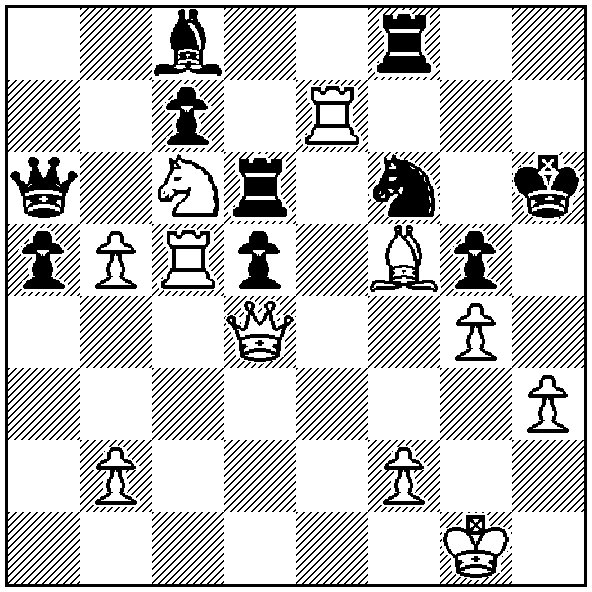
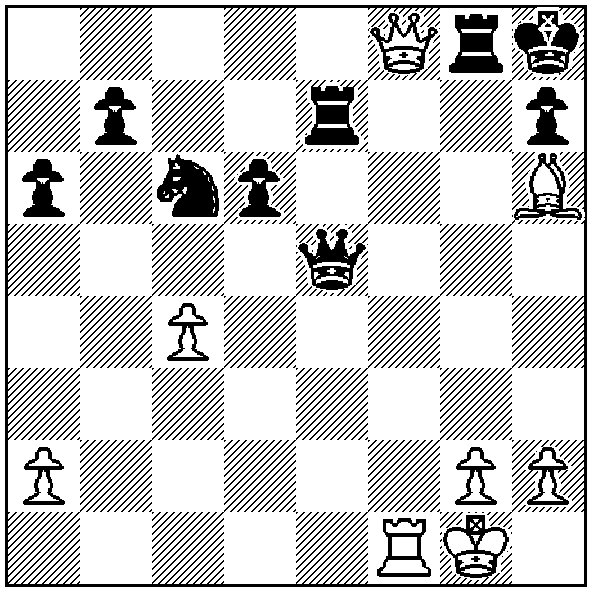
Test your endgame thinking
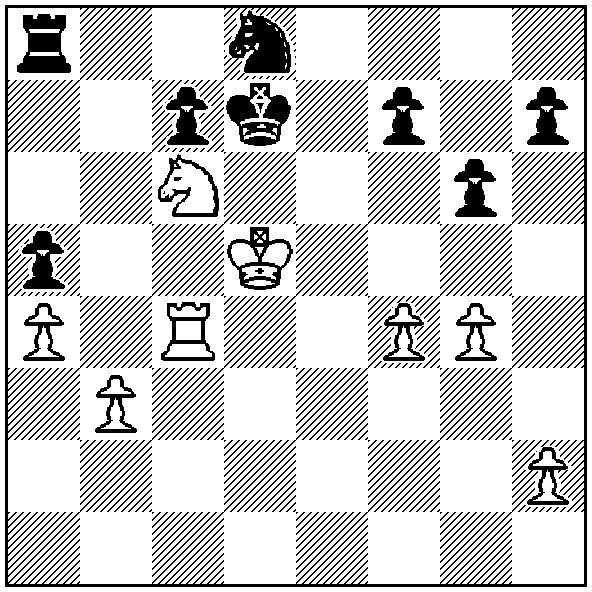
Thought I would post some of these from a book titled test your endgame thinking by Glenn Flear. The book gets continuously more difficult and thus these posts will too.
Should white exchange knights?
Blog worlds have collided...

I stumbled across another blogger and chess enthusiest from Wisconsin the other day. He has a particularly interesting blog given that he posts on numerous subjects. I find that chess can get dry without knowing a bit of the personality behind the thoughts. Since chess is at some level a reflection of ones personality. Right?
He commented on my rating and I realize it could use a little more justification. I use it loosley. But its fairly accurate. My ratings on Pogo.com and MSN chess hover around 1700. Also my opponents on chessmaster 7000 that are most equal have ratings a little over 1700. I assume if anything it is a little high but my interest in chess goes well beyond any rating system. For more clarity read one of my first posts Knight Skewer Manifesto.
He also commented on my recent post about the Colle System. He mentioned a Colle Koltanowski variation that I am not familiar with. Although I do get most of my Colle knowledge from Colle System 11th edition by George Koltanowski so perhaps I know more than I think. This is welcome motivation for a little more research and also to finish my Colle system post. Which I just did. And I am very interested in feedback on Polgars new DVD.
Welcome aboard fellow patriot I will also be checking your blog often.
Saturday, September 09, 2006
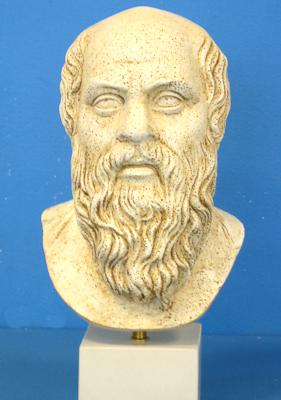
Socratic Chess
"An unexamined game is not worth playing."
A movement in chess can be a considered a good move at one point in time but a poor movement at another. No move is always good, but only good in the scope of its position and surroundings. Some moves are more often good and others more often poor based on a common theory, the original setup of the board or a string of thoughts and moves from an individuals mind. Like in life their is no law of good moves or bad, of right and wrong. The complexities are so extraordinary that we go through life valuing one idea over another much the same as one values the knight over the bishop, only to learn through experiences later that you were mistaken . This process of judgment continues on throughout a lifetime getting ever closer but never concluding a "law of chess moves."
A movement in chess can be a considered a good move at one point in time but a poor movement at another. No move is always good, but only good in the scope of its position and surroundings. Some moves are more often good and others more often poor based on a common theory, the original setup of the board or a string of thoughts and moves from an individuals mind. Like in life their is no law of good moves or bad, of right and wrong. The complexities are so extraordinary that we go through life valuing one idea over another much the same as one values the knight over the bishop, only to learn through experiences later that you were mistaken . This process of judgment continues on throughout a lifetime getting ever closer but never concluding a "law of chess moves."
Sunday, September 03, 2006
Rob V Dan sometime in 02
"Suspicion alone is not enough to speak. Once spoken out the suspicion is real enough to be the work of truth." - Rome
1. d4 e6
2. e4 d5
3. e5 Nc6
4. Nf3 g6
5. Bb5 Bg7
6. Bg5 f6
7. exf6 Bxf6
8. BxB QxB
9. BxN PxB
10. Ne5 c5
11. c3 Cxd4
12. Qxd4 Rb8
13. O-O Ba6
14. Nc6 Rxb2
15. Qxa7 BxR
16. Qa8+ Kd7
17. Na3 Qf2+
18. Kh1 Qg2+ Mate
we've come a long way.
1. d4 e6
2. e4 d5
3. e5 Nc6
4. Nf3 g6
5. Bb5 Bg7
6. Bg5 f6
7. exf6 Bxf6
8. BxB QxB
9. BxN PxB
10. Ne5 c5
11. c3 Cxd4
12. Qxd4 Rb8
13. O-O Ba6
14. Nc6 Rxb2
15. Qxa7 BxR
16. Qa8+ Kd7
17. Na3 Qf2+
18. Kh1 Qg2+ Mate
we've come a long way.
Sunday, August 27, 2006
Friday, August 25, 2006
Point values
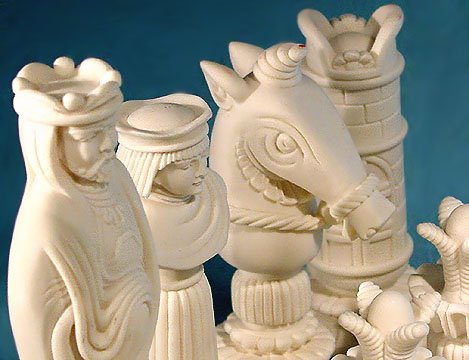
Queen = 9 points
Rook = 5 points (The value of a rook increases when the endame begins.)
Knight = 3 points (The knight is considered more valuable than a bishop in a closed game.)
Biship = 3 points (The bishop is considered more valuable in an open game and when you have the pair.)
Pawn = 1 point (Pawns are more valuable when they become a duo or two in a row. They also gain value in the endgame when their chances of promotion become greater.)
The Colle System
Hans Kmoch's words on Edgard Colle - " I knew him for exactly seven years. I made his acquaintance at Baden-Baden 1925. From then on we met at countless tournaments and my admiration for him increased more and more. During these numerous tourneys I saw, heard and experienced a great deal. When it is a question of struggling for money and fame, for honor and achievement, the best of men often give way and follow the instinct for self-preservation. That is natural and not ugly. But this was never true of Colle: it was impossible for him. For his courtesy, his kindness, his chivalrous unselfishness-these qualities were not acquired, they were innate. In victory and in defeat he remained a cavalier."

Edgard Colle was remarkably resiliant. He was plagued with illness for his entire life. Perhaps that was his motivation for becoming a grand master. He played in over fifty tournements in just ten years. He died in 1932 at the age of 35. If their were ever superheroes in the chess world, he would be one.
Edgard Colle was remarkably resiliant. He was plagued with illness for his entire life. Perhaps that was his motivation for becoming a grand master. He played in over fifty tournements in just ten years. He died in 1932 at the age of 35. If their were ever superheroes in the chess world, he would be one.
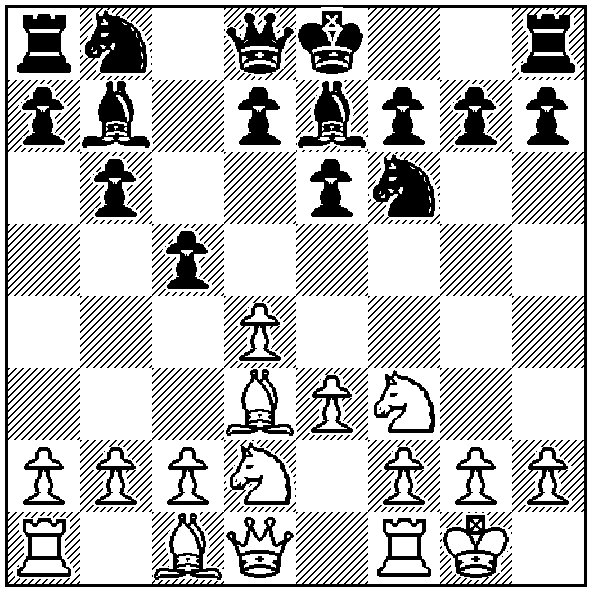
Heres the thing about the Colle system. It is a marriage between three solid concepts: Controlling the center, defending the king and launching an attack against the oppositions castled king. Their is a lot of objection to this system. Its not terribly aggressive, its relatively predictable and everyone knows its strengths and weaknesses. I love it as a fall back position...something to transpose into when my original plan falls through. Its also a great teaching tool for beginners. Everyone should learn this "business mans opening." The following is Colles favorite game and a good example of his system.
1. d4 Nf6
2. Nf3 e6
3. e3 b6
4. Bd3 Bb7
5. Nbd2 c5
6. O-O Be7
7. b3 cxd4
8. exd4 d6
9.Bb2 Nd7
10. c4 O-O
11. Rc1 Re8
12. Re1 Qc7
13. Qe2 Rac8
14. Nf1 Qb8
15. Ng3 Qc8
16. Ng5! g6?
17. Nxf7 KxN
18. Qxe6 Kg7
19. d5 Nc5
20. Nf5+ Kf8
As far as the Queens Bishop goes I do not see it as a problem. I know it is the most commonly known "fault" of the system but their are many ways around it strategically and psychologically. One of the ways to deal with it is that it will often work itself out naturally after the push of the Kings Pawn or e3-e4. Giving you the c1-h6 diaginal which is good to pin the knight or launch an attack. Both of which I enjoy. Another way is to drop the bishop on a3. Im sure this is not the most acceptable move tactically. But it has very powerful psychological effects. I call it the "Sniper" for good reasons:
It may prevent black from castling by harrasing g8.
It may prevent black from castling by exchanging bishops after ...e3 or...e4 is played to break whites pawn structure. Also giving you the bonus of exchanging your "Problem Bishop."
For some unexplained reason people often forget it is thier. This is not scientific. We are delving into the art of chess. I have sniped countless rooks from experienced players in the late middle game because they didnt see him hiding in the bushes. Patience is the key.
For more on the Colle check out my review of a solid book on the Colle Zukertort: http://knightskewer.blogspot.com/2009/04/colle-zukertort-revolutionized.html
Subscribe to:
Posts (Atom)